
Distance Diploma Pathway program

Chiko Jones

Erika Aupperle

Robyn Porritt

Aimee McLeod

Aimee McLeod
The Distance Diploma Pathway program is studied part-time over eight semesters (4 years). It is taught via a combination of twice-yearly compulsory On-Campus Schools, projects completed in your own studio with the help of DVD's and accompanying notes, and access to online resources and discussion. At these Schools the semester’s projects are introduced by tutors who, depending on the expertise needed for each project, are either invited artists recognised as leaders in their field, or staff members of the School of Art.
Apply for the Distance Diploma here
Course Content
The course introduces a wide range of skills and processes within the context of contemporary approaches to studio ceramics. Discussion of the crafted object, design, small production, sculptural ceramic objects and installation practices form a background to the practical, technical and theoretical aspects of the course. Skills and techniques covered include: wheelthrowing, handbuilding, mold making and casting, glaze and clay technology, surface and imagemaking techniques etc. Because, uniquely, specialists in specific areas primarily teach the content, the semester and year in which you commence determines the order in which the content unfolds. For example, the Glaze Clay and Kilns course is delivered every two years; it may commence the course for you, or, if you commence a semester after it is delivered, you may find it falls in your third semester. You can be assured though that regardless of where the specific content falls, you will be given all of the information you need in each project to ensure you can complete the studio work to your satisfaction.
On Campus Schools
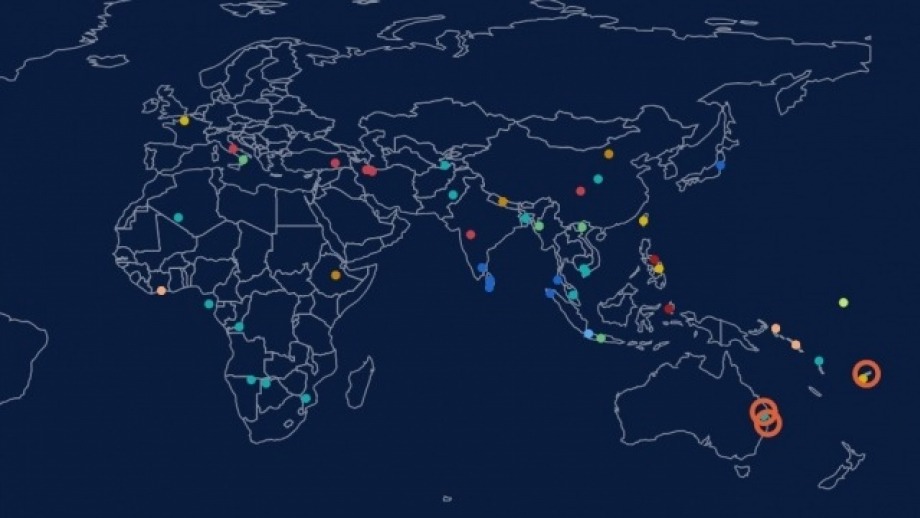
To begin of each semester (January and June), students attend the nine-day On-Campus school. Here you undertake intensive workshops in the ceramics studio, and rotating complementary studies in either drawing, design, photography or art history. At each School, you bring a selection of your work, your journals, documentation & research (from the previous semester) for assessment by Workshop staff. Students currently enrolled in the course are from both urban & rural locations in Australia, Singapore, Malaysia, New Zealand, Canada and the United States – so you can be sure of interesting company and a wide variety of viewpoints from your fellow students.
Projects
For the first three years of the course students alternate between wheel and off-wheel projects, which are introduced and demonstrated at the On-Campus school. A DVD is made at the On-Campus school for you to use as a reference in your own studio. Generally, each semester you will have a wheel-based, and an off-wheel project. For example, one project may be the throwing and altering of vessel forms, and the other may focus on printing techniques for three dimensional forms. Students at all levels complete the same project and different stages of development and level of experience are taken into account during Assessment. Each project lasts for half a semester (8 weeks).
In the final year, students undertake a self-directed project determined through consultation with staff and formalised by submission of an Independent Work Proposal (IWP). You design your IWP projects around techniques and themes you are interested in developing further.
Glaze and Clay Kilns Course
A two-part Glaze Clay and Kilns component is provided every two years (beginning level, then advanced level), and introduced at an On-Campus School. It is conducted as a project-based module that you continue at your own pace, with additional assignments to be completed for assessment at the end of the semester. Course materials are provided via handouts, CD and WebCT. Students working at the advanced level are required to purchase Matrix2000 glaze software and a special discount price is available for ANU students.
Online Learning Environment
To enable you to interact with each other and with staff, we make use of an online course management program called WebCT. Using this, students go online and ask staff questions about projects or about general technical or theoretical matters. Students can also chat with each other about course issues and generally keep in touch with what’s happening in between the On-Campus Schools. Each semester’s projects are posted on the online site. This includes information about tutors, preparatory reading or research requirements, and details of each School’s schedule. In addition, students are required to use the site to submit a mid-semester report and images of work-in-progress on which workshop staff provide feedback.
You will need access to a computer with an Internet connection to use WebCT. Training on how to use WebCT is given to all new students at their first On-Campus School, and help is available thereafter as required. Basic word processing software is needed, along with access to a digital camera, and basic image manipulation software is desirable.
Studio/Study Time
The minimum weekly requirements for the course are 6 hours per week. Just as on campus students do, you will find you need to spend up to double that amount of time to satisfactorily complete the projects so you should allow enough space in your schedule. If the need arises a project can be extended beyond the due dates (for example completing one project over a whole semester rather than a half semester). However this will be dealt with on an individual basis according to circumstances.
Final Assessment
For administrative reasons, your final assessments are held in the middle of each year. If you commence in the first semester of any year, you would normally expect to finish at the end of the final semester of your fourth year - ie in November. In such cases you will be required to defer your final semester so that your completion date is mid-year.
Course Fees
The first three years of the course are conducted as up-front fee units ($1500AUD per semester).
The fee covers costs including:
- Tuition and administration fees
- Annual General Workshop Fee
- Production & copying of videos
- Cost of materials sent out to students ie.DVD's,folders, labels, envelopes, photocopying, printing
- All firings and glazes for class exercises at On-Campus Schools
- Postage
- Access to WebCT site
Final Year Course Fees, Enrolment & Awards
In the final year of the course you choose to either transfer your enrolment to the Diploma of Art award, or continue as a Distance Diploma Pathway student. The enrolment option you choose will lead to the different awards as below:
The Diploma of Art is a two year fulltime course (four fulltime semesters) and the study you have completed in the Pathway course is equivalent to three (3) fulltime semesters. You are therefore required only to complete the final semester of the Diploma. Distance students complete this as a part-time student over one year.
In the Government’s Higher Education Contribution Scheme (HECS), fees can be either paid up-front with a discount, or deferred and paid with tax. For further information please visit the HECS web-site.
How to Apply
Fill out the Application form here. These should be lodged 2 months prior to your first On-Campus School. eg. in April or November. Once this process is completed, you will receive a Student Identification number & password, together with instructions for accessing the Online Learning site. Then you can see how the course operates and download the Project material and requirements before you commence. It also gives you the opportunity to introduce yourself to existing students and arrange accommodation for the period of the School.
Contact
For more information about the Distance Diploma in Ceramics contact:
Joanne Searle
Coordinator, Distance Diploma Program
Ceramics Workshop
School of Art
The Australian National University
Building 105
Canberra ACT 2601
Email: Distance.Ceramics@anu.edu.au
Telephone +612 6125 5823
Facsimile +612 6125 5723